
We live surrounded by options. New trends every week, “must-haves” that last one season, and closets full of clothes… yet we reach a point where we’re buying without a clear intention. Sometimes we shop just for the feeling of having something new, and other times we try to shop consciously but don’t really know where to begin.
That’s why this year we decided to do the 12 months, 12 pieces challenge.
One intentional purchase per month, chosen with complete awareness, thinking about who we are today, how we live, and what we truly need. By doing this, we move away from impulsive shopping and begin building a capsule wardrobe made of key pieces we’ll reach for a long time.
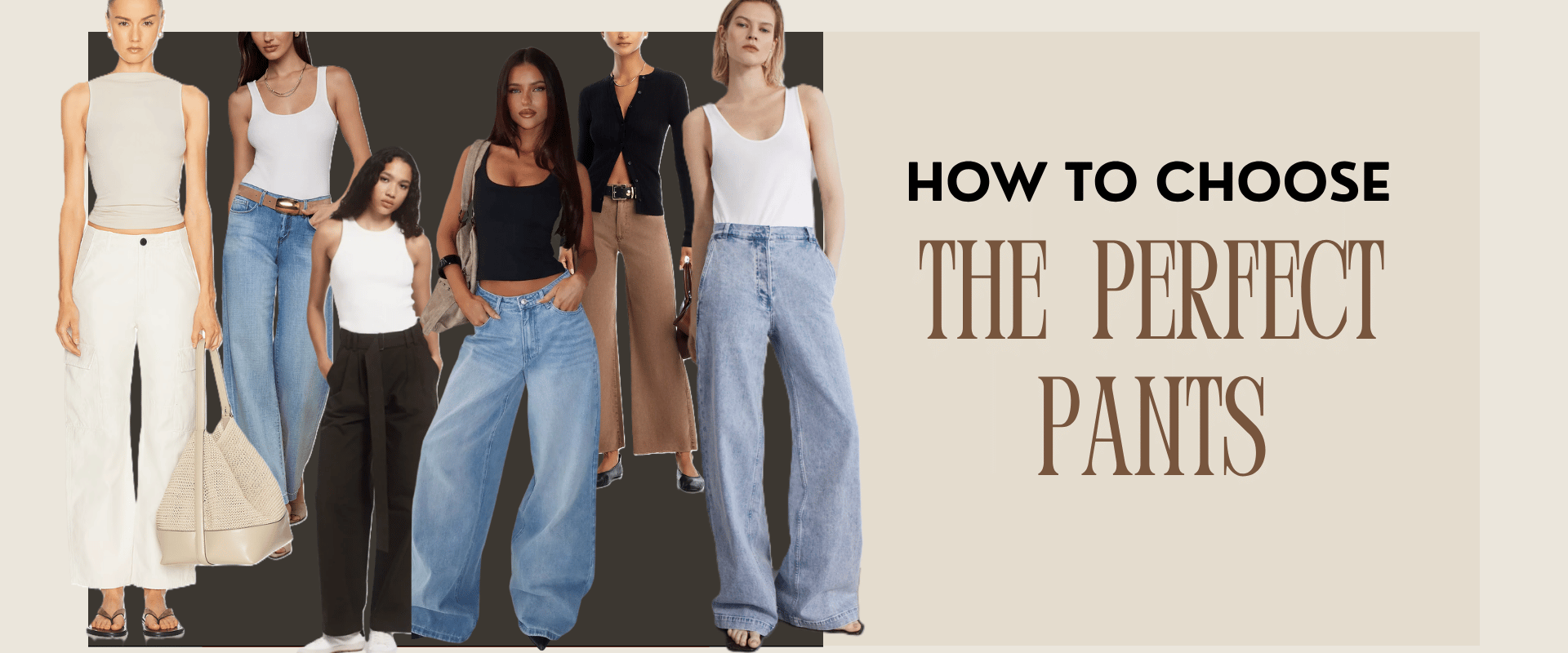
This month, we’re focusing on the key piece for the structure of any outfit: PANTS. While blouses often grab our attention, the right pants form the foundation of your look. By covering a significant portion of your body, this garment is fundamental in determining whether you enjoy your day or are constantly adjusting. It’s one of the most versatile and useful pieces of clothing, but finding the perfect fit remains one of the biggest challenges.
We understand that navigating the vast sea of fabrics, rises, and silhouettes can be overwhelming. Too often, we settle for any style that looks good without considering the demands of our daily lives. That’s why we want to refocus on making choices based on your real life, your body, and your personal style. Throughout this guide, we’ll explore how to identify the best materials for your lifestyle and which cuts provide the balance your body and wardrobe need.
In this guide, we’ll walk you through the process step by step so you can make an informed and conscious decision.
By the end, you’ll know exactly which pants to look for, which ones align with your lifestyle, body, and essence; and, just as importantly, which pants to avoid, no matter how beautiful they may be.
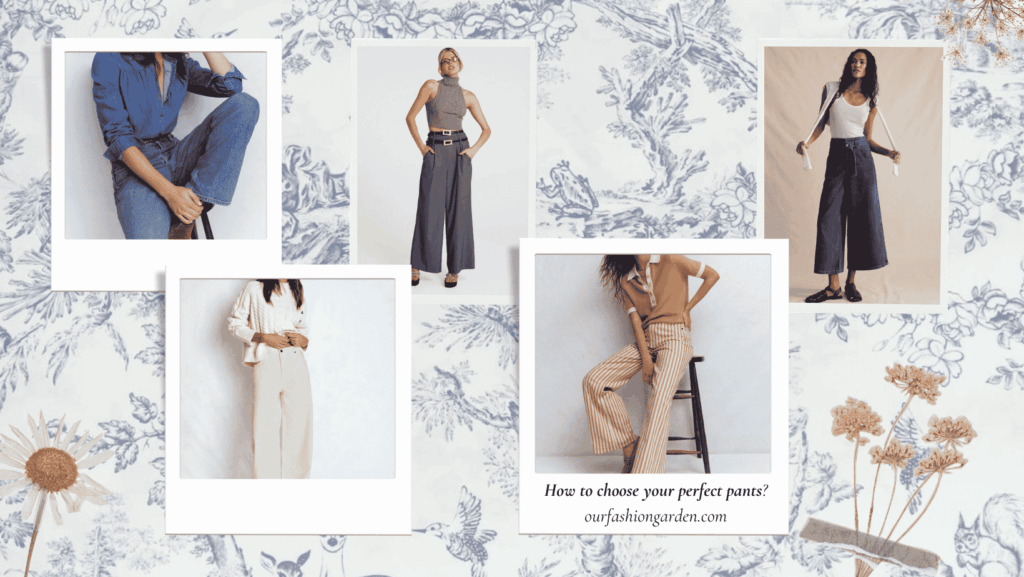
Pants for the real life
Before settling on a specific style, several elements deserve your attention! Choosing the right pants requires analyzing your daily activities and the environments you frequent, as well as the climate where you live. Understanding these factors provides the foundation for identifying your ideal materials, so take a look. You can approach this as a sort of quiz: the fabrics you tick the most boxes for are likely to make you feel most comfortable. Once you know the material, you’ll then be able to choose prints, colors, or finishes to further express your personal style.
Section 1:
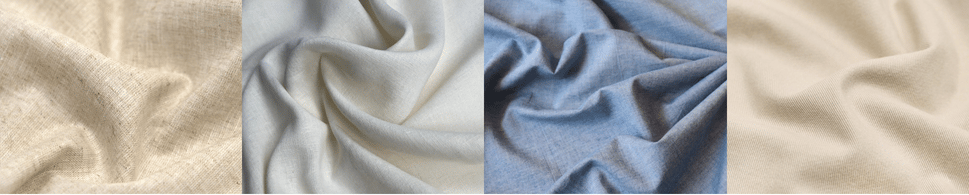
Check these if: You live in a humid or tropical climate, you prioritize natural fibers, or you tend to feel overheated easily.
I need fabrics that allow air to circulate to stay cool.
I prefer an organic, slightly relaxed look and don’t mind a few natural wrinkles.
My climate involves high temperatures or high humidity.
I move around a lot and need a fabric that won’t feel sticky against my skin.
Your best matches: Linen, Lyocell, Chambray, and light Cotton Twill.
Section 2:
Check these if: You work in a climate-controlled office, you have frequent meetings, or you live in a temperate area where transitional clothing is key.
I spend most of my day indoors and need a look that stays sharp and wrinkle-free.
I prefer a sophisticated drape that looks expensive and smooth.
My weather is unpredictable, so I need materials that work for both mild mornings and warm afternoons.
I want a clean silhouette that holds its shape from morning to night.
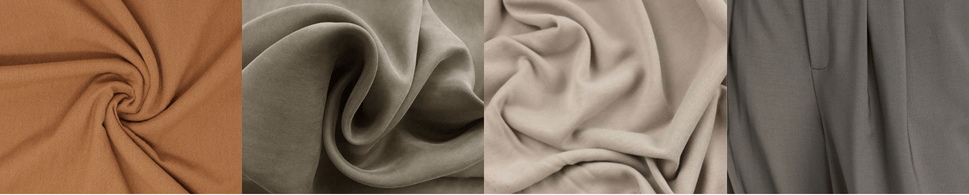
Your best matches: Cotton Crepe, Viscose/Rayon, Cupro, and Lightweight Wool.
WE ENCOURAGE YOU TO TRY SUSTAINABLE NATURAL FIBERS RATHER THAN SYNTHETICS OR BLENDS
Section 3:
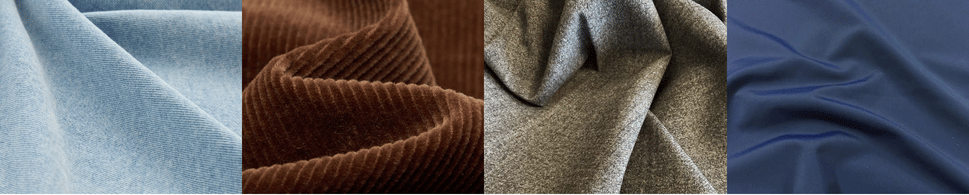
Check these if: You live in a place with harsh winters, you enjoy outdoor activities, or you need tough pants that can handle rain or wind.
I need my pants to act as a barrier against the cold or wind.
I prioritize durability and easy-to-clean materials for my busy routine.
My climate involves low temperatures, snow, or damp conditions.
I like a casual aesthetic.
Your best matches: Denim, Corduroy, Heavy Wool, and Nylon-Thermal Blends.
WE ENCOURAGE YOU TO TRY SUSTAINABLE NATURAL FIBERS RATHER THAN SYNTHETICS OR BLENDS
Section 3:
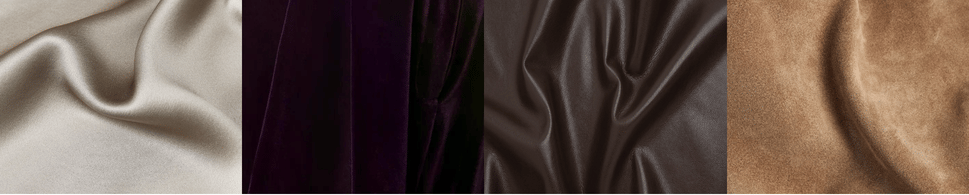
Check these if: You are dressing for a specific event (a gala, a party, or a creative meeting) where the vibe of the fabric matters more than the weather.
I want my pants to be the focal point of my outfit through texture or shine.
I am looking for a specific weight, either very airy and flowing or thick and plush.
I am dressing for an indoor event where I don’t have to worry about the elements.
I enjoy very tactile fabrics that feel luxurious to the touch.
Your best matches: Silk, Chiffon (for layered styles), Velvet, Leather, and Suede.
WE ENCOURAGE YOU TO TRY SUSTAINABLE NATURAL FIBERS RATHER THAN SYNTHETICS OR BLENDS
Take a look at your high-score section. If you live in a cold climate but your closet is full of Section 1 materials, you’ll likely find yourself reaching for leggings or tights to layer underneath, which can change the fit of your pants. By aligning your fabric choices with your actual local weather and your daily activity level, you’ll find that getting dressed becomes a much more intuitive and comfortable process.
Your body matters
When it comes to skin health, the choice of materials is almost as important as your skincare routine, since pants are in direct and constant contact with the body, generating friction and retaining heat.
In case you were wondering, here are some materials that, while common, can cause irritation or dermatological problems if used too frequently or under unsuitable conditions:
1. Polyester and Nylon
The most common fibers in fast fashion, yes, they can be very cheap, but they have a drawback: they don’t breathe. By not allowing moisture to evaporate, they trap sweat and heat against the skin. If you’ve noticed acne breakouts on your buttocks and legs, and you wear these fabrics a lot, there might be a problem here, so you could switch to other types of fibers, preferably natural ones, to see if the continuous use of synthetic fabrics is what’s affecting you.
2. Very Stiff Denim or Raw Denim
Although cotton is a natural fiber, excessively thick denim dyed with a lot of synthetic indigo can be harsh for your skin. We suggest washing all your denim jeans thoroughly before wearing them for the first time to remove most of the dye residue before the fabric comes into contact with your skin.
3. Conventional Wool
Short-fiber or poorly processed wool has flakes that stick out and prick the skin. This causes the well-known itching, which in sensitive skin or those with eczema can trigger dermatitis flare-ups. Someone with sensitive skin should opt for Merino wool or cashmere, whose fibers are much finer and smoother, or make sure the jeans have a viscose or silk lining.
4. Synthetic Leather (Polyurethane/PVC)
Synthetic leather acts like a layer of plastic wrapping around your legs. It’s the least breathable material. Sweat gets trapped completely. It is preferable to reserve this material for special occasions or opt for sustainably sourced leathers.
Pants for your Kibbe Body Type
The Kibbe system is the best tool for identifying which pant silhouettes will naturally harmonize with your physical structure. This approach helps you understand whether your frame is best supported by crisp and structured lines, relaxed and unconstructed shapes, or perhaps soft and draped fabrics.If you still don’t know your Kibbe, you can take our quiz here or schedule your personalized consultation where you’ll receive a style guide with everything you need to know! These are some key aspects that can guide you in finding pants according to your body type:
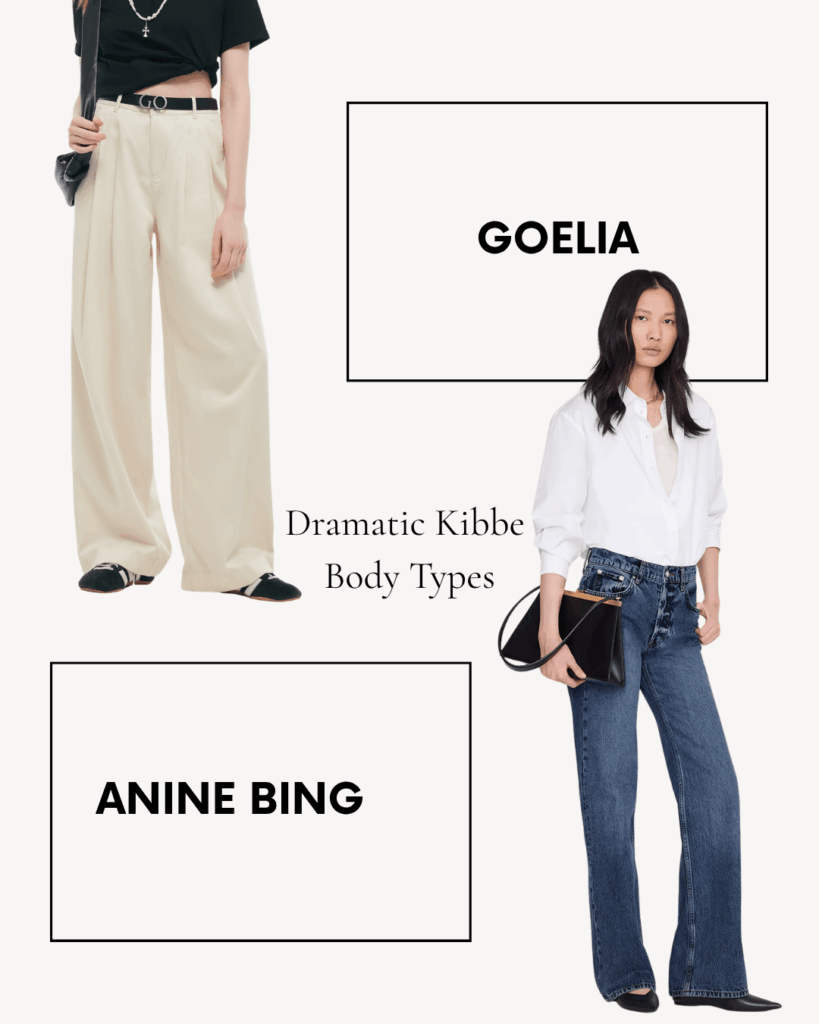
Dramatic
Your frame handles sharp edges and long, uninterrupted lines better than anyone. To keep that sleek silhouette, you need fabrics that hold their shape and don’t collapse at the knee or ankle.
What to look for
- Crisp finishes
- Long hemlines that hit the top of your shoe
- Minimal detail at the hip to keep the line clean
- High-waist dress pants with a sharp front crease
- Floor-length Palazzos
- Straight-leg and wide-leg denim jeans in a dark wash
- Leather trousers
What to avoid
- Very soft or flowing cuts or with small details like gathers or ruffles.
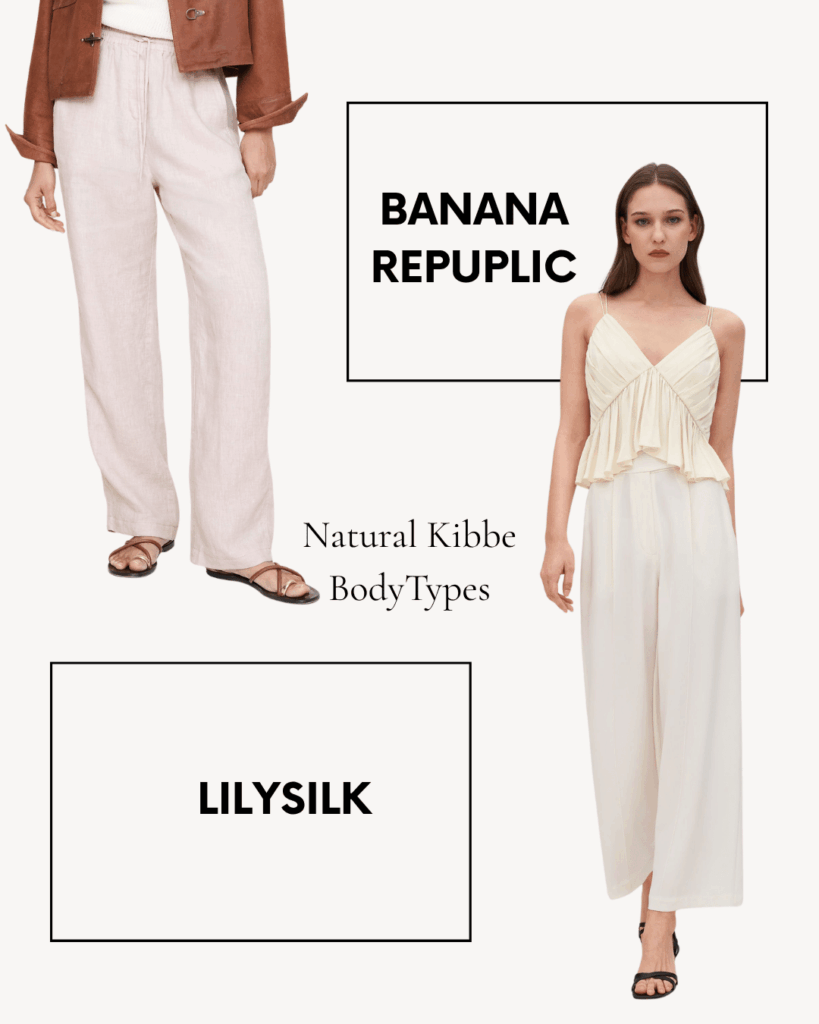
Natural
You need a bit of breathing room in your clothes. Tight, restrictive cuts often feel off because your frame looks best when the fabric can move. Look for silhouettes that follow the natural line of your body without clinging.
What to look for
- Unconstructed waistbands
- Wider leg openings
- Trousers in linen or wool gabardina
- Soft palazzos that drape from the hip
- Cargo pants
- Baggy jeans or joggers
What to avoid
- Skinny jeans, structured cuts, very ornate details.
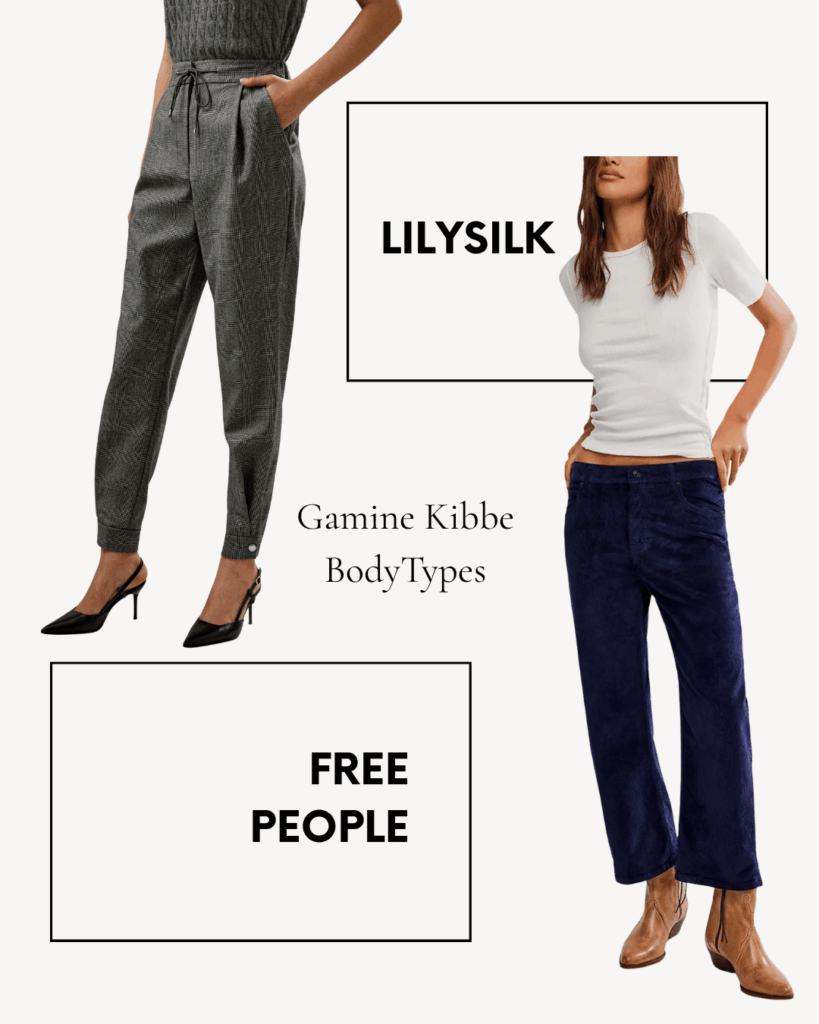
Gamine
Because your frame is more compact, extra fabric is your enemy. You look most put-together when your pants are fitted and end precisely at the narrowest part of your leg.
What to look for
- Tapered ankles
- Contrasting waistbands
- Cropped lengths that show off your footwear
- Cigarette pants
- High-waisted ankle-cut trousers with a slight stretch
- Skinny jeans
- Capris
- Carrot pants that stay slim through the calf.
What to avoid
- Long and flowing pants, classic tailoring, wide leg, and long silhouettes without cuts
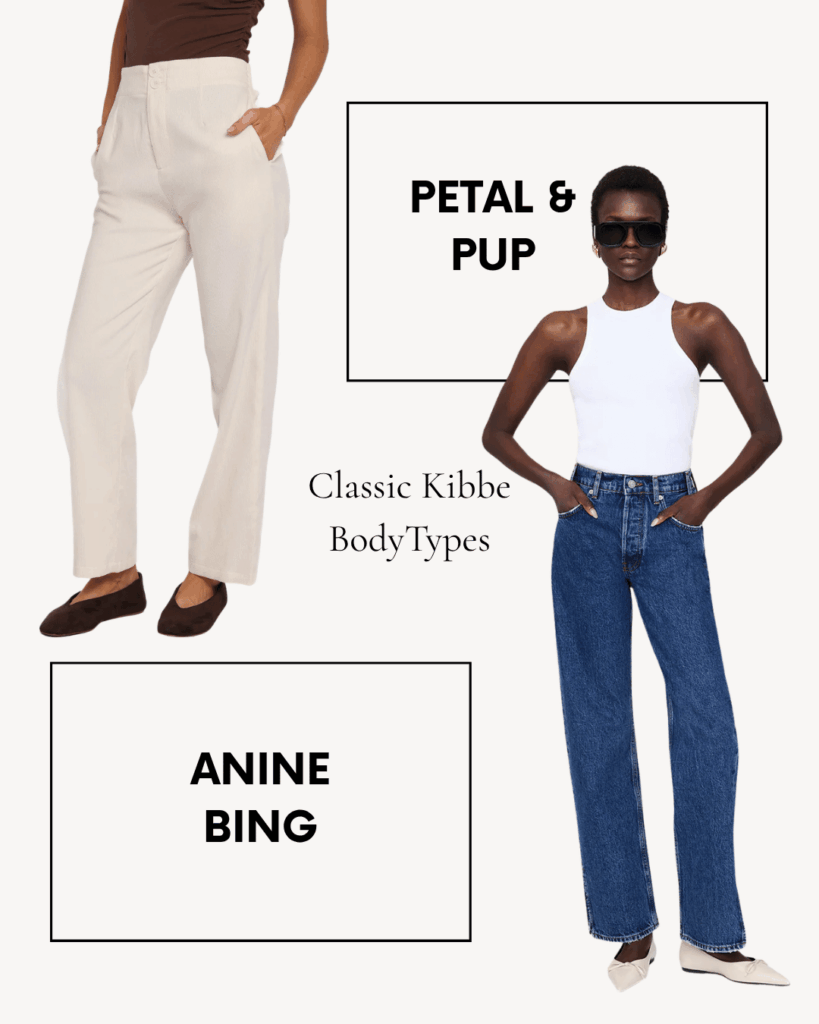
Classic
Anything too wide feels messy, and anything too tight feels costume-like. Keep everything in moderation.
What to look for
- Perfect fit at the waist
- Mid-to-high rises
- Hemlines that hit exactly at the ankle or just below
- Straight-leg dress pants or a subtle bootcut
- Straight-leg jeans
- Cigarette pants in a clean, solid color with no distressing
What to avoid
- Baggy or oversized cuts, designs with many details, or pockets
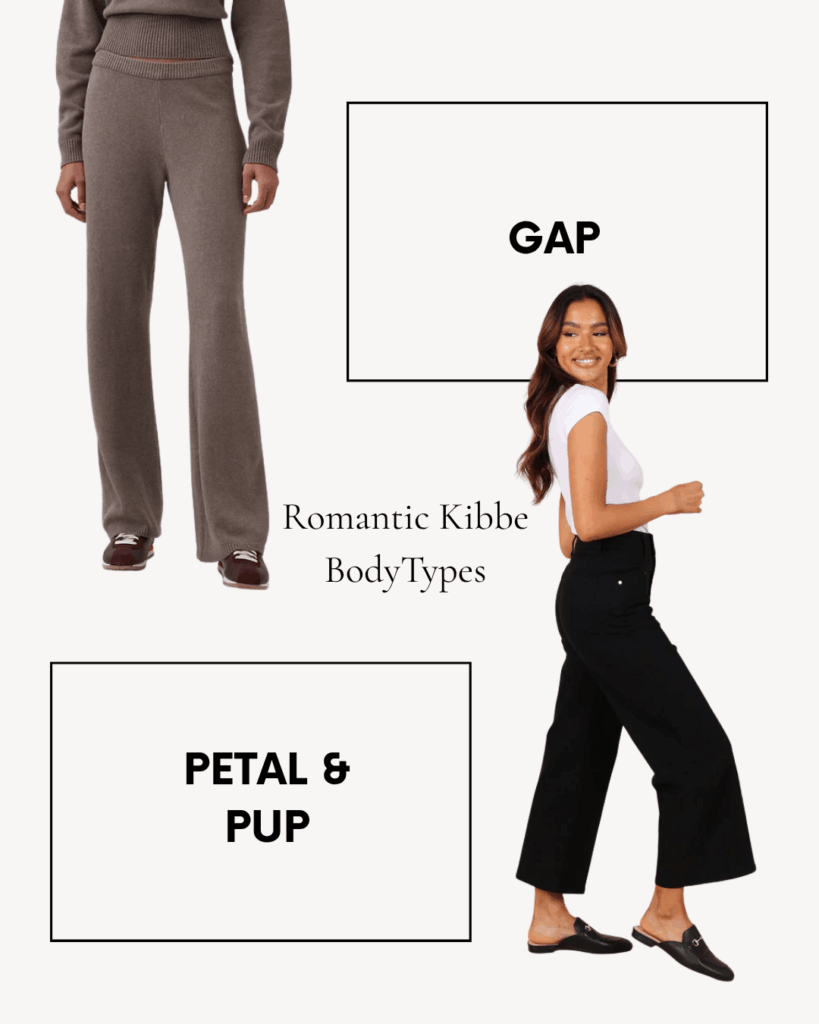
Romantic
Your goal is to highlight your natural curves rather than hiding them behind stiff fabric. That’s why you need materials that flow over the hips and a waistband that sits exactly at your narrowest point.
What to look for
- Seek out lightweight fabrics
- Rounded silhouettes
- Soft gathering or pleating at the waist
- High-waisted Palazzos
- Culottes that mimic the movement of a skirt
- Soft straight-leg chinos
- Wide-leg jersey pants
What to avoid
- Baggy or oversized cuts, rigid straight ones, masculine or androgynous designs, and stiff fabrics
Pants for your Essence
Dramatic
This essence always makes a statement through high-impact details. If you have a Dramatic essence (especially as your main essence), you can search for:
- Oversized metallic buttons, exposed zippers (or placed in uncommon areas), or deep, sharp pleats.
- Look for extra-wide waistbands or even a stirrup detail at the hem.
- High-shine finishes, waxed denim.
- Geometric prints, high-contrast pinstripes, or oversized animal patterns.
Natural
Anything too shiny or delicate usually feels out of place here.
- Deep patch pockets, drawstring waists, and visible double-stitching are details that match this essence.
- Matte wood, bone, or horn buttons.
- Suedes, linens, and corduroy.
- Subtle textures like heathered knits, muted plaids, or a simple herringbone.
Gamine
You can pull off quirky elements that would look overwhelming on people with other main essences.
- Search for boldly cuffed hems, contrasting top-stitching, or buttons in a completely different color than the pants.
- Look for asymmetrical pocket placements or side-stripe details.
- You shine in sharp patterns: small polka dots, gingham, or bright, multi-colored stripes.
Classic
For you, the detail is the lack of detail. Your goal is a look where nothing competes for attention.
- Opt for details like hidden closures, welt pockets (the ones that are just a thin slit), and centered belt loops.
- Buttons can be dyed to match the fabric exactly, so they disappear.
- Wool, smooth gabardine, and silk-blends.
- Stick to timeless patterns like a delicate prince of Wales check or a very fine, tonal stripe.
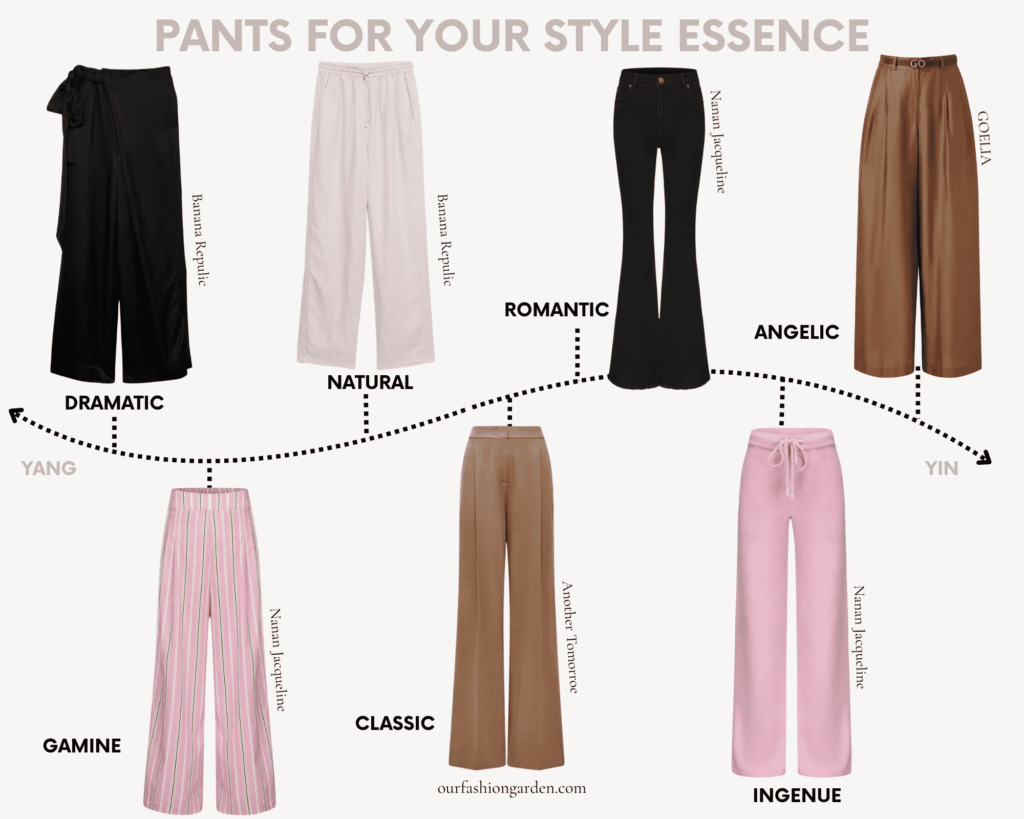
Romantic
Everything here should feel soft to the touch and visually “rich.”
Ribbon-style waist ties, delicate draping at the hips, or ornate buttons made of pearl or filigree.
You can wear textiles like velvet, heavy silk, or cupro.
Go for large-scale, watercolor florals or intricate, curvy baroque patterns.
Ingenue
Similar to Romantic but on a smaller, sweeter scale.
Tiny bow accents, pearlized buttons, or delicate embroidery like broderie anglaise at the hem.
Look for small, rounded pocket flaps.
Eyelet lace, lightweight denim in pastels, or soft seersucker.
Dainty prints are your best friend.
Angelic
You can wear fine accordion pleats, sheer paneling at the lower leg, or hems that trail slightly.
Look for hidden zips and a total absence of heavy hardware.
Iridescent fabrics, metallic threads, or ultra-fine mesh.
Choose prints that look like smoke, marble, or soft celestial gradients.
How to Identify Good Quality Pants
- Quality seams must be straight, uniform, and free of loose threads. Check for reinforcements in high-stress areas like the crotch and pockets, and look for double or well-made overlock seams for greater durability.
- High-quality details include zippers that run smoothly and are durable, well-sewn buttons, and clean, firm hems.
- A good pair of pants should keep its shape and not deform at the knees or waist after just a little use.
Maybe you, like us, realize that our clothing choices go beyond simply picking “that one because it’s pretty.” Perhaps we all initially shop with this mindset; however, in times when we need to be mindful of our finances and consider environmental and ethical factors more carefully, making each choice calmly and intentionally is the best thing we can do. This way, we ensure, firstly, that our choice will be something we love, that it will fit us well, that it will be comfortable, and that it won’t just take up more space in our closet; and secondly, that we’ll be mindful of our budget by buying only what we truly need and love!
Choosing a silhouette that flatters your figure and a fabric that respects your skin might seem simple, but keep in mind that when you do this, you’re not just getting dressed; you’re choosing your comfort, respecting your body’s unique lines and characteristics, doing your part by not consuming things you don’t need, and saving yourself a good amount of money that you can use for things that are surely more important than trendy pants.
So, take a look at your closet: do your pants reflect your essence or are they just taking up space?
We hope this guide helps and makes your shopping much easier. As part of this challenge, each month we’ll recommend an essential piece to help you create a personalized capsule wardrobe. So don’t forget to come back soon for the next item!
And to make the process even easier, you can use Handpicked Attire to search for clothing (yes, pants included) filtered by your body type, your style, and even your budget. That way, instead of starting from scratch each time, you begin with options that already look great on you.


Leave a Reply