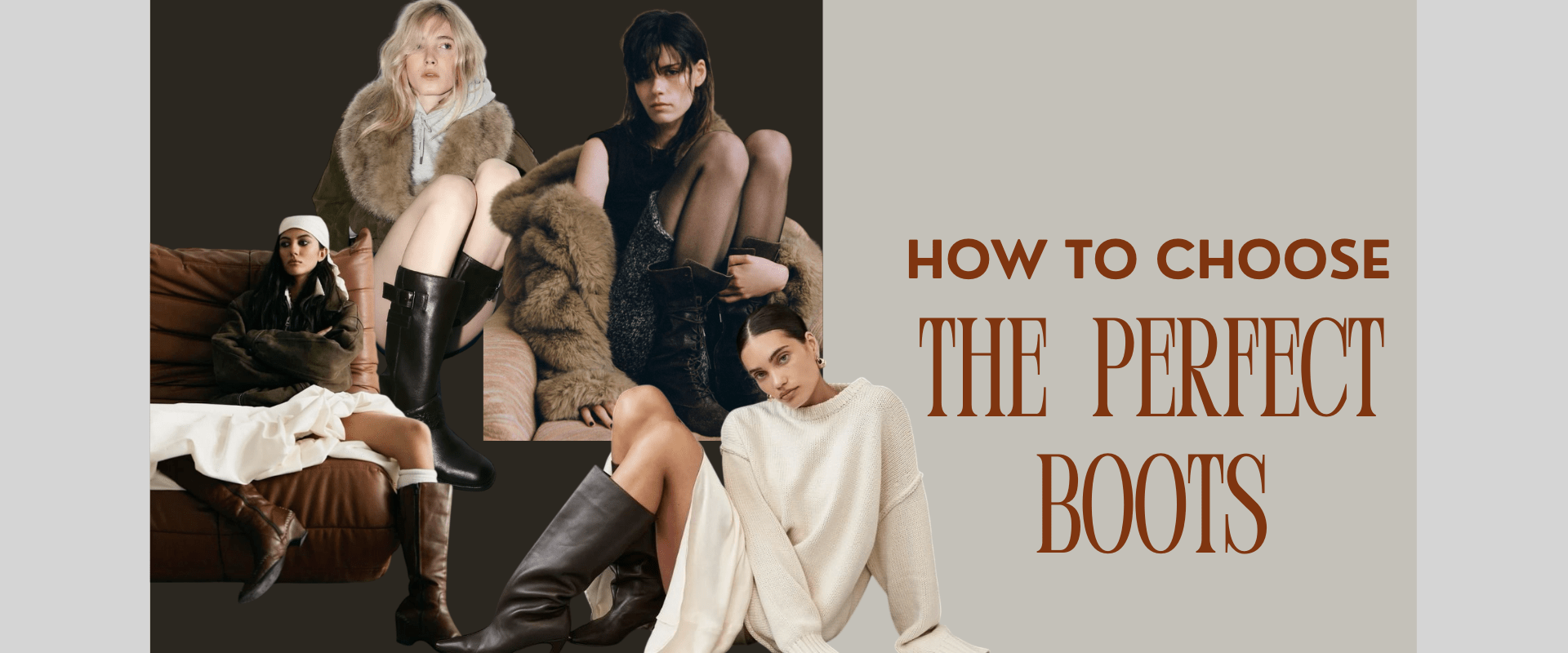

We live surrounded by options. New trends every week, “must-haves” that last one season, and closets full of clothes… yet we reach a point where we’re buying without a clear intention. Sometimes we shop just for the feeling of having something new, and other times we try to shop consciously but don’t really know where to begin.
That’s why this year we decided to do the 12 months, 12 pieces challenge.
One intentional purchase per month, chosen with complete awareness, thinking about who we are today, how we live, and what we truly need. By doing this, we move away from impulsive shopping and begin building a capsule wardrobe made of key pieces we’ll reach for a long time.
And if there’s one item that can completely change the way you get dressed, it’s boots. You wear them for hours. They support your body, affect your posture, your comfort, and even the energy you project. The right pair of boots can elevate the simplest outfit… while the wrong ones often end up forgotten at the back of your closet (or worse, causing discomfort or pain).
The most common mistake when buying boots is choosing them based solely on trends, because they’re fashionable, because they look cute on Pinterest, or because “everyone is wearing them.” But the truth is, this way of shopping is exhausting. Boots shouldn’t be chosen based on trends alone, but on your real life: your routine, your body, your style, and your essence, because what works for someone else won’t necessarily work for you.
In this guide, we’ll walk you through the process step by step so you can make an informed and conscious decision.
By the end, you’ll know exactly which boots to look for, which ones align with your lifestyle, body, and essence; and, just as importantly, which boots to avoid, no matter how beautiful they may be.
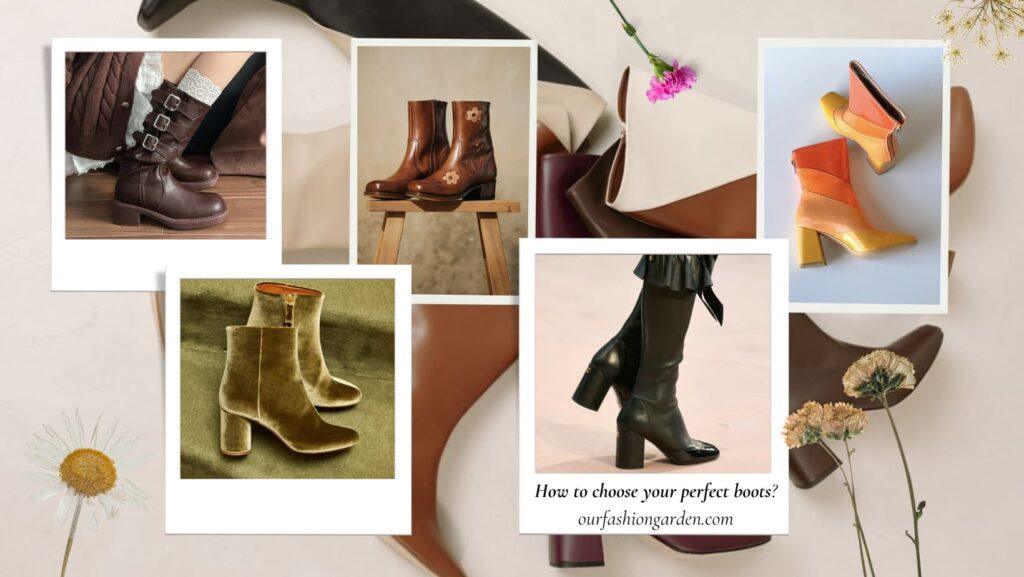
Boots for the real life
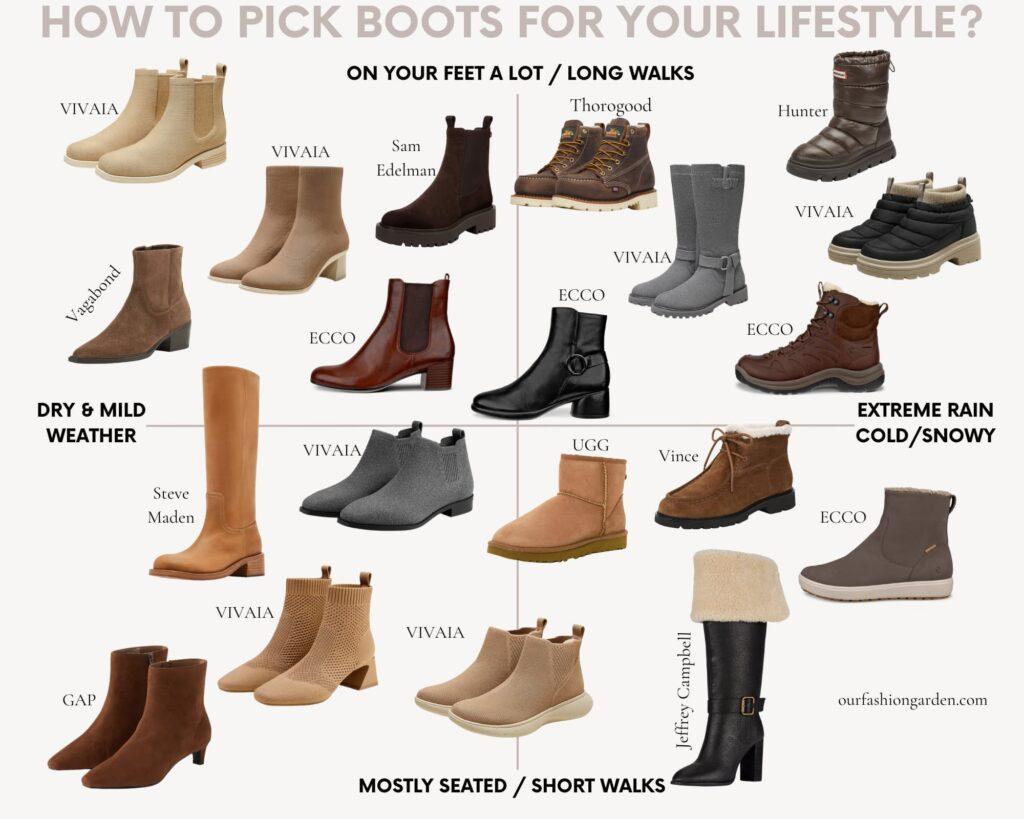
Before choosing a style, heel, or even a color, the most important thing to consider is how your boots will function in your everyday life. Boots should be chosen based on your routine, and the better they adapt to it, the more you’ll wear them. Here are some questions you can ask yourself to determine the type of boot you need, along with some tips to make the choice easier.
1. How many hours a day am I on my feet?
Long hours standing or walking: Flat or low-heeled boots, thicker soles, good cushioning, and ankle support will feel much more comfortable. Combat boots, flat ankle boots, or structured styles are usually great options.
Mostly sitting or short distances: If your day involves less walking, you can comfortably wear medium heels or more structured designs more often without feeling exhausted.
2. Walking vs. Driving
If you walk a lot: Prioritize grip, stable soles, and comfort. Ankle boots, combat boots, or flat knee-high boots tend to work well for daily walking.
If you mostly drive: Comfort and stability are key. Avoid tight shafts, slippery soles, or high heels that can feel restrictive or unsafe while driving.
Look for flat or low-heeled boots with good grip, breathable materials, and enough room for your foot to move naturally. Lace-up boots, soft leather ankle boots, or heritage-inspired styles (like Red Wing–style boots) are excellent options for long hours behind the wheel.
3. Climate & environment
Cold or rainy climates: Closed designs, leather or waterproof materials, and higher shafts help with warmth and protection.
Mild or transitional climates: Ankle boots and lighter materials tend to be more versatile and wearable year-round.
Unpredictable weather: Boots with rubber soles, thicker construction, or weather-resistant finishes are often the most practical long-term choice.
4. Dress code & daily activities
Casual or relaxed lifestyles: Flat boots, combat boots, Chelsea boots, and easy ankle boots integrate effortlessly into everyday outfits.
Formal or polished environments: Clean lines, sleeker silhouettes, heeled boots, or structured knee-high styles usually feel more aligned.
Hybrid lifestyles: If your days require you to look casual but also polished, versatile styles like low-heeled ankle boots or structured flat knee-high boots tend to work across settings.
Your body matters
The weather and your daily activities are clearly important factors when choosing your boots, but something you definitely can’t overlook is your body and what makes it feel comfortable. Your body carries you through a lot, so let’s try to make its job easier instead of adding extra weight.
5. Weight & body
If you carry weight in your hips, thighs, or calves, very tight shafts or stiff leather can feel uncomfortable very fast, even if the boot fits your foot perfectly. Softer materials, stretch panels, lace-up styles, or adjustable designs will feel much easier to wear.
If you’re on your feet a lot; working, running errands, or walking with your kids, boots with thin soles or very narrow heels can feel exhausting by mid-day. Thicker soles, wider heels, or solid flat boots help distribute weight better, which means less pressure on your feet and joints. And yes, heels can make your legs look longer, but if by hour three you’re already uncomfortable, they’re not doing you any favors. And if what you want is a slightly more polished but equally comfortable look, many women (myself included) believe that low heels or slightly raised soles (not too thick) provide that polished touch.
6. Health & comfort
If you’ve ever come home with sore feet, a stiff back, or aching knees, your shoes were probably part of the problem. Unstable heels, hard soles, or poorly fitting boots can put extra strain on your knees and lower back. This is especially noticeable if you spend a lot of time on your feet, walk on hard surfaces, or carry heavy loads (including bags, children, or groceries).
Especially if you suffer from foot pain, sensitive arches, or weak ankles, ill-fitting boots can turn an ordinary day into a painful one. Here are some key factors to consider to prioritize your health:
- Sole: Cushioning and shock absorption help during long days and protect your joints.
- Heel: Wider, well-fitting heels make walking easier and are more flexible over time, reducing the risk of them breaking or wearing out quickly.
- Materials: Soft, breathable leather or flexible materials that adapt to the foot reduce friction and provide a better feel after hours of wear.
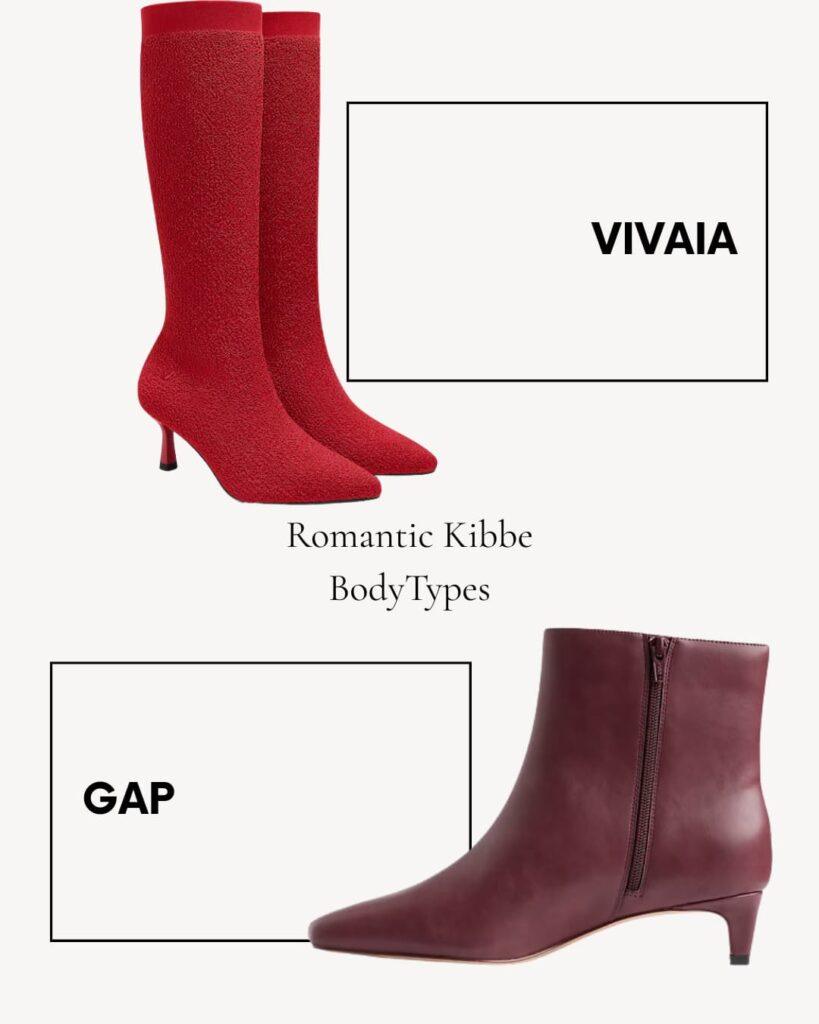
There are many brands aware of the impact shoes have on your health, so they prioritize sustainable designs and materials for you and your body. One I personally recommend is VIVAIA. I’ve tried their shoes, and even walking in heels is super comfortable, so I recommend checking out their boots. I think they’re truly worth the price.
Boots for your Kibbe Body Type
The Kibbe system is the tool for discovering which boots will look best on your body. Perhaps your body naturally looks better in structured, relaxed, soft, playful, or balanced shoes. If you still don’t know your Kibbe, you can take our quiz here or schedule your personalized consultation where you’ll receive a style guide with everything you need to know! These are some key aspects that can guide you in finding boots according to your body type:
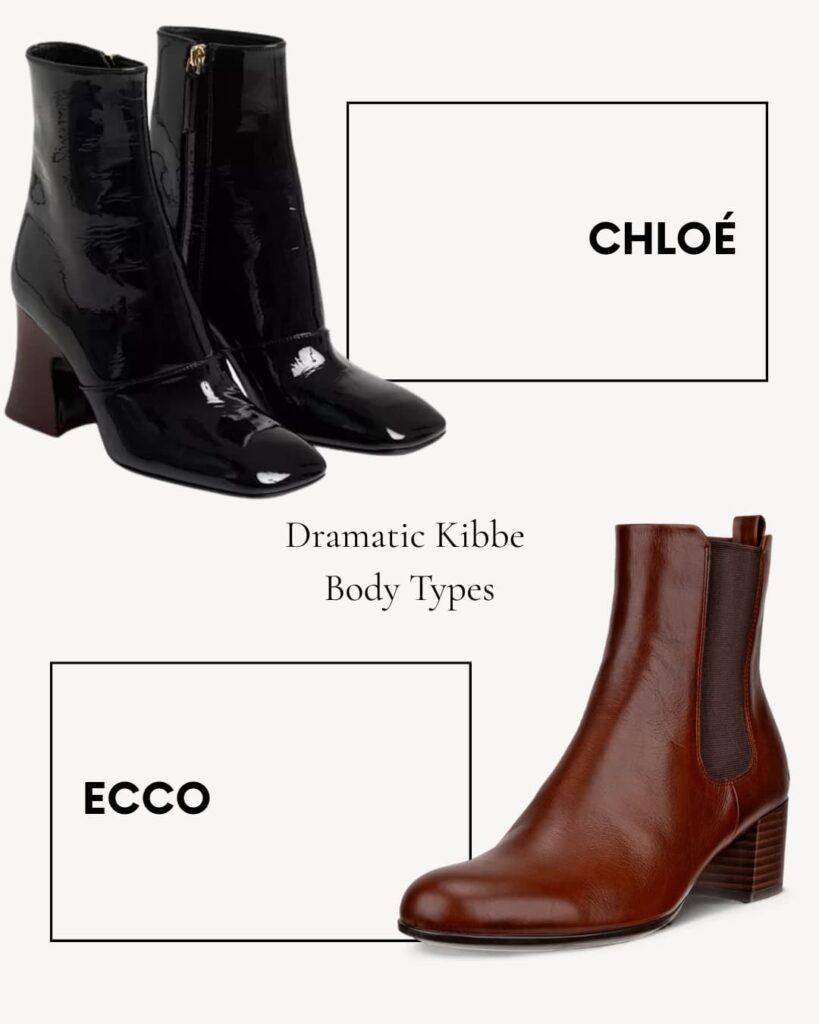
Dramatic
What to look for
- Long, clean lines
- Pointed or subtly square toes
- Sleek ankle boots or tall boots
- Straight or geometric heels
- Smooth, structured leather
What to avoid
- Rounded, overly soft shapes
- Tiny decorative details
- Casual or overly cute styles
Natural
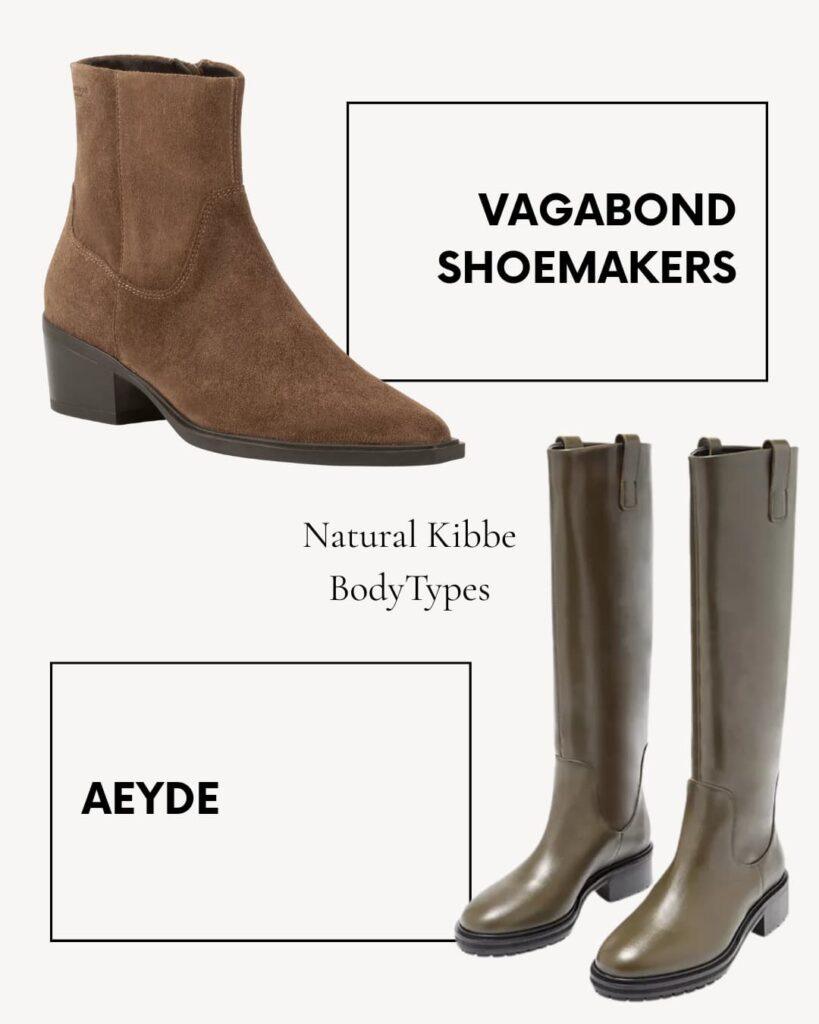
What to look for
- Thicker soles or visible structure
- Matte or textured materials
- Relaxed shapes, slightly chunky
- Block heels or subtle platforms
What to avoid
- Very sharp pointed toes
- Thin, delicate heels
- Overly rigid designs
Gamine
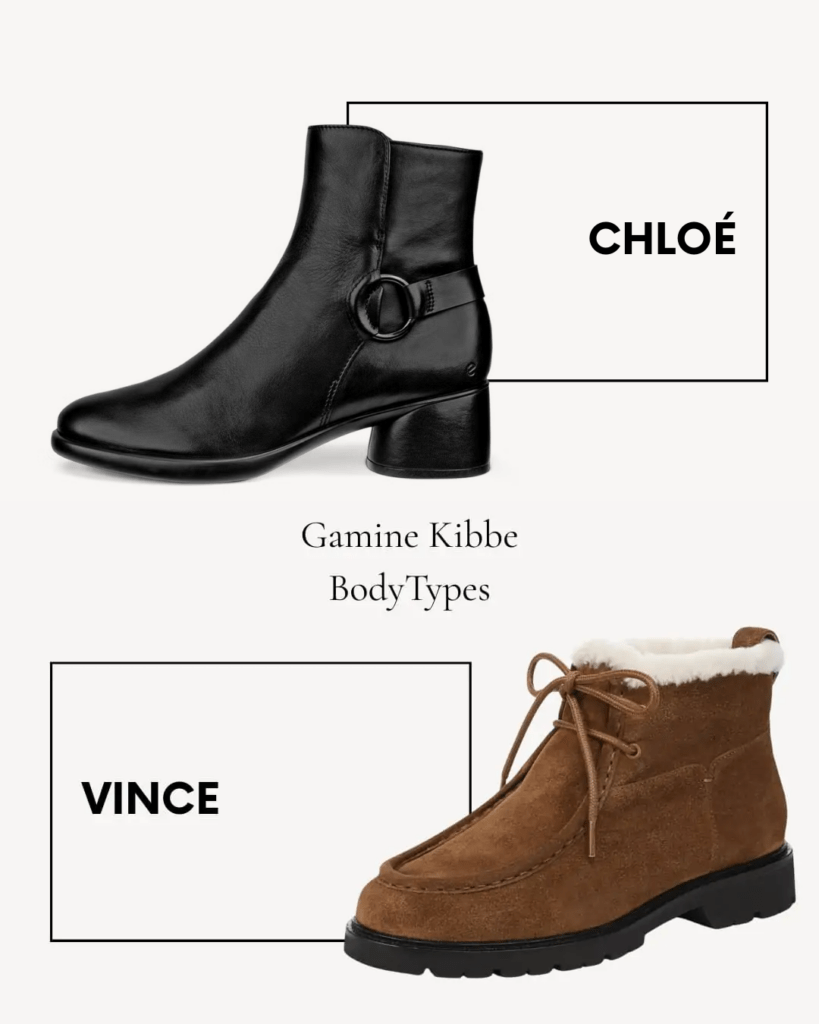
What to look for
- Short ankle boots
- Contrast in color, texture, or sole
- Fun details (zippers, platforms, color blocking)
- Bold but compact shapes
What to avoid
- Very long-tall boots
- Very minimal or conservative styles
- “Too grown-up” designs
Classic
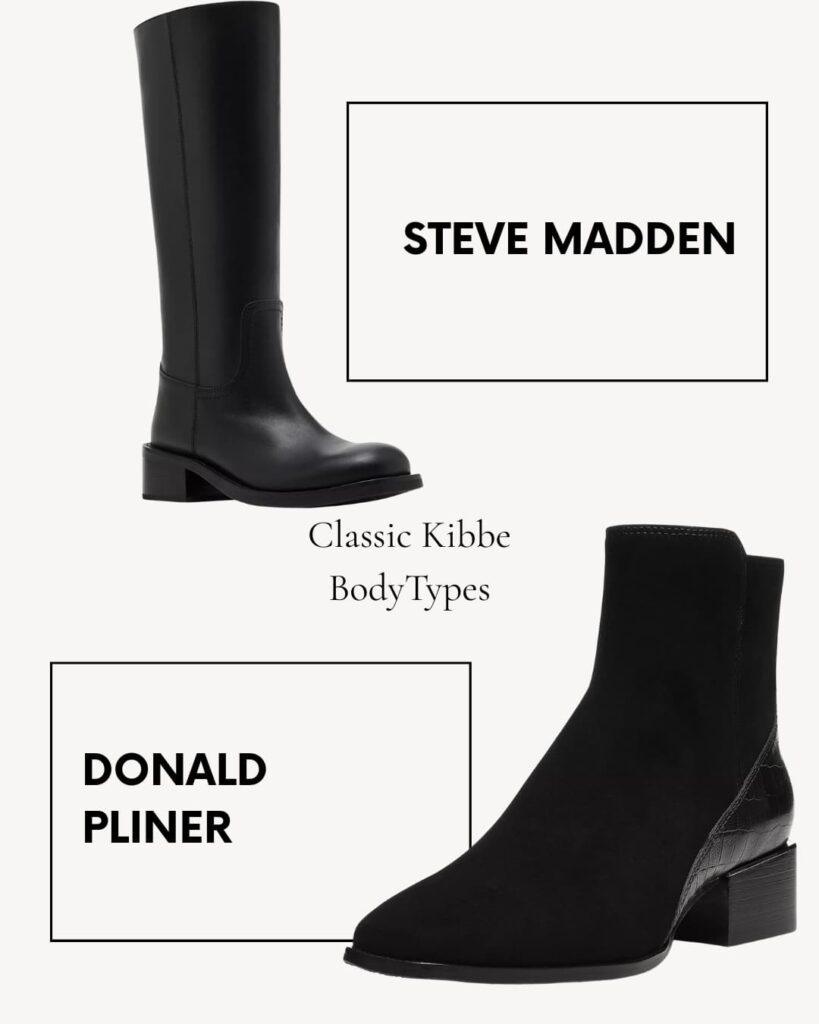
What to look for
- Clean, proportional shapes
- Medium heel height
- Neutral colors
- Simple, elegant design
What to avoid
- Extreme trends
- Heavy chunkiness or excessive details
- Anything too dramatic or too casual
Romantic
What to look for
- Rounded or softly tapered toes
- Mid-calf or ankle boots that hug the leg
- Curved or medium-height heels
- Soft leather or suede
- Delicate details (but not too much)
What to avoid
- Heavy, chunky soles
- Harsh straight lines
- Masculine or stiff styles
Boots for your Essence
Dramatic
- If your main essence is dramatic, you want boots with visual impact. Your ideal material is structured leather with a polished finish.
- Look for designs with pointed or sharp toes and clean edges.
- Details should be minimal yet dazzling, such as straight heels, defined stitching, and perhaps a touch of metal.
Natural
- Someone with natural essence looks best in textured boots with materials like matte leather, grained finishes, nubuck, and slightly rough materials. Chunky soles are a great match for your essence!
- Unlike the dramatic essence, overly polished leather, pointed toes, or very refined details will look somewhat restrictive on you.
Gamine
- For the Gamine essence, contrasting boots work well; you don’t have to limit yourself to solid-colored boots. As for materials, they can be mixed, including leather, suede, or structured fabrics.
- Low-soled ankle boots suit you very well, as do platform boots. Your footwear can have visible hardware, short shafts, and details.
Classic
- As for the Classic essence, you’re right in the middle of the style essences spectrum, neither Yin nor Yang, but the midpoint. Leather boots are a must-have, although they don’t need to be overly thick leather; a medium-thickness leather with a smooth finish works best.
- Look for symmetrical and proportional shapes and details. Moderate heels are also a foolproof choice that you can wear with different outfits. Extreme textures, exaggerated soles, or flashy hardware tend to overshadow this essence.
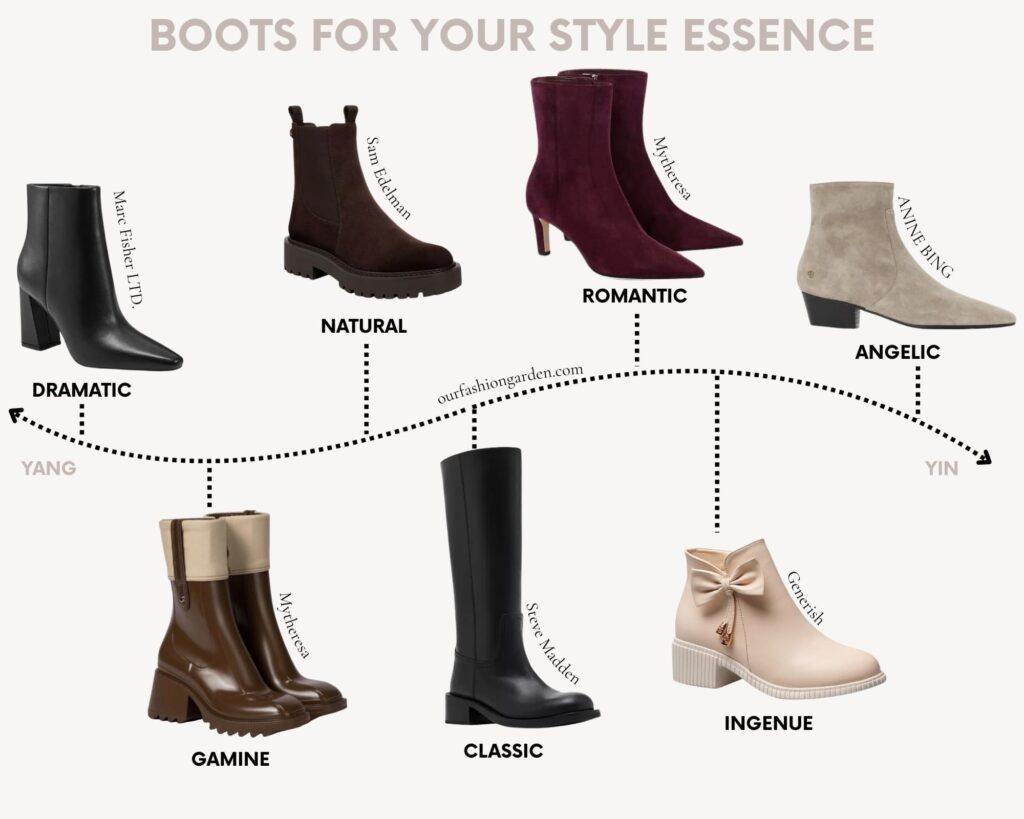
Romantic
- The romantic essence requires more flexible materials; suede or materials with a natural but luxurious drape complement this essence better than rigid finishes. Curved heels, rounded or slightly tapered toes, and shafts that adapt to the leg are key.
- Details should be refined and feminine, but not too delicate or dainty, because we don’t want them to be confused with the ingenue essence details. Chunky soles, stiff leather, or boxy shapes often feel too visually heavy for people with this essence.
Ingenue
- If your primary essence is Ingenue, choose lighter materials that visually convey a sense of softness and comfort, such as fine leather, the softest suede, and light finishes that will feel more appropriate than heavy or robust materials.
- Boot shapes can be smaller, with minimal details that add a touch of cuteness.
- Thin soles, low heels, and clean lines work better than thick constructions, oversized hardware, or heavy textures.
Angelic
- The Angelic essence requires lightness in construction. Smooth, fine-grained leather, suede, velvet, delicate finishes, and visually light materials work best.
- Soles and heels tend to be thinner than those of the other essences, and shapes are elongated without being pronounced. Details are minimalist and can be abstract.
Interesting, right? Most of the time we choose clothes and shoes very lightly, without stopping to think about how much design, materials, and comfort actually matter.
Most of us love boots, so why suffer through a pair that leaves your feet sore, makes you tired halfway through the day, or lets water seep in every time you walk through your beautifully rainy city?
At first, all this information might feel like a lot to process. But once you understand the key elements your boots need to have, shopping becomes much easier. You automatically rule out the options that don’t work for your life, and you focus only on the ones that do.
- A good boot has good materials. Real sustainable leather, or high-quality alternatives, age better, adapt to your foot, and usually become more comfortable over time. On the other hand, very stiff synthetic materials might look good at first, but they tend to crack, lose shape, or feel uncomfortable after just a few wears.
- Stitching matters more than we think. Clean, even stitching is usually a sign of better construction and durability. Loose threads, uneven seams, or boots that rely mostly on glue are often the first ones to fall apart.
- A good sole absorbs impact, offers grip, and can handle real daily wear. While thin or slippery soles might work for occasional outings, they wear out quickly and can affect how your body feels over time.
- Repairability is another key detail we often overlook. Boots that can be resoled or reheeled last much longer. If a pair can be repaired instead of replaced, it usually means it was built better from the start.
- And finally, think about price versus cost per wear. A cheaper pair you only wear twice ends up costing more than a higher-quality pair you wear week after week.
We hope this guide helps and makes your shopping much easier. As part of this challenge, each month we’ll recommend an essential piece to help you create a personalized capsule wardrobe. So don’t forget to come back soon for the next item!
And to make the process even easier, you can use Handpicked Attire to search for clothing (yes, boots included) filtered by your body type, your style, and even your budget. That way, instead of starting from scratch each time, you begin with options that already look great on you.




Leave a Reply