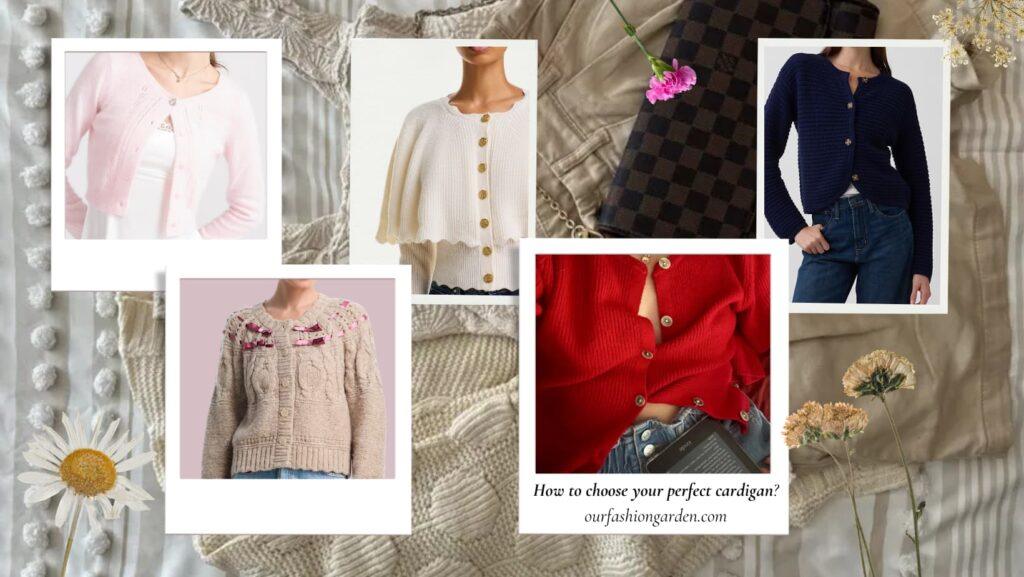
We live surrounded by options. New trends every week, “must-haves” that last one season, and closets full of clothes… yet we reach a point where we’re buying without a clear intention. Sometimes we shop just for the feeling of having something new, and other times we try to shop consciously but don’t really know where to begin.
That’s why this year we decided to do the 12 months, 12 pieces challenge.
One intentional purchase per month, chosen with complete awareness, thinking about who we are today, how we live, and what we truly need. By doing this, we move away from impulsive shopping and begin building a capsule wardrobe made of key pieces we’ll reach for a long time.
And this month our garment is ”the cardigan”. Often seen as just another layer for chilly offices or relegated to the grandpa sweater category, it is actually the hero of a nice and functional capsule wardrobe.
Unlike a stiff blazer or a heavy coat, a great cardigan is much more versatile and comfortable. You can wear it with a silk slip dress for a coffee date or as a cozy layer to a professional button-down. Furthermore, it’s the piece that transitions you through the seasons without breaking a sweat.
Therefore, the goal of this guide is to explore the different styles of cardigans to help you find a piece that truly fits your look and your life. Just as we broke down the perfect boots, we’re going deep into the knits.
In this guide, we’ll walk you through the process step by step so you can make an informed and conscious decision.
By the end, you’ll know exactly which cardigan to look for, and which one aligns with your lifestyle, body, and essence.

Selecting the right fiber or fabric
To choose your ideal cardigan, the material is a key starting point. The fiber is the garment’s DNA; it determines the warmth, how the fabric drapes, and its appearance after five washes. Furthermore, the material should be suitable for where you live, because you wouldn’t want to wear a hot cardigan if you live on the coast, right? No matter how cute it looks.
1. Natural Fibers
If you want a cardigan that breathes and lasts for years, natural fibers are your best bet.
Cashmere: Known for being incredibly lightweight yet eight times warmer than sheep’s wool. It is one of the most beloved and most premium fibers, so it can also be more expensive, but unmatched in softness and insulation.
Wool: Whether it’s merino, alpaca, or lambswool, these fibers are naturally moisture-wicking and durable. Merino is particularly great because it’s thin enough for layering but keeps you warm in sub-zero temps.
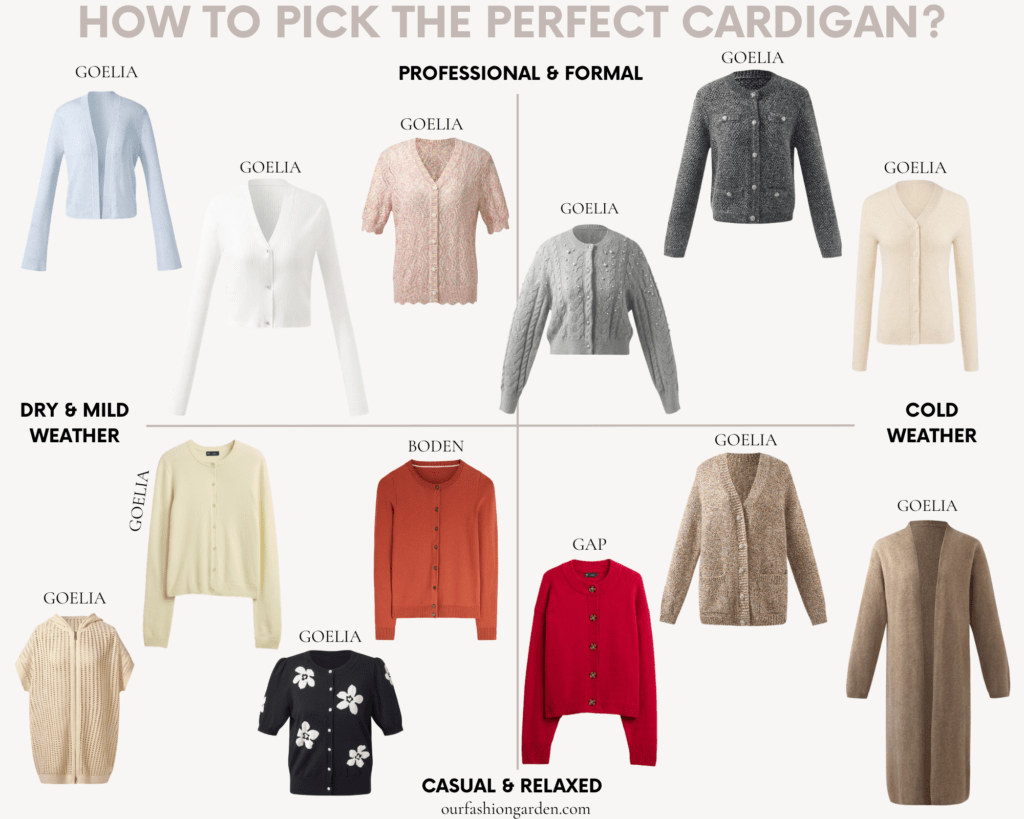
Cotton: Perfect for dry and mild climates. Cotton doesn’t trap heat as wool does, making it the ideal choice for air-conditioned offices or breezy summer evenings. It provides that crisp, clean look without the bulk.
At the end of the day, it’s all about your lifestyle. If you’re okay with a little extra work (hand-washing, flat-drying, and being careful), natural fibers are great. But if you’re busy and just want something you can toss on without worrying about it stretching out, a good synthetic blend is honestly your best bet.
One thing to watch out for with natural wool is moths. They literally eat your cashmere, wool, or clothes. To avoid those annoying little holes, don’t leave your cardigans out in the open for months. Store them in airtight bins or bags with some cedar blocks or lavender, and make sure they’re clean before you put them away.
2. Synthetic Fibers
When we talk about eco-friendly fashion, synthetic fibers like polyester or acrylic often get a bad reputation. While it’s true that natural fibers are generally more sustainable to produce, there is another side to the sustainability coin: A cardigan made of recycled polyester that you wear 100 times is far more sustainable than a 100% organic wool cardigan that sits in the back of your closet because it’s too itchy or doesn’t fit your style.
Synthetic fibers are significantly more affordable and usually hold their shape well. Of course, it will depend on the blend you choose; fibers like polyester and nylon have high memory. That is, if you stretch a synthetic cardigan, it usually snaps back to its original shape.
- Another important point is that synthetic blends are much less likely to shrink or warp in the laundry compared to 100% wool or cashmere, which can felt or lose their shape entirely if handled incorrectly.
One of the cons is that they don’t breathe. If you tend to run hot, a 100% acrylic cardigan might make you feel sweaty.
Synthetics and cheap blends are prone to pilling (those tiny fuzzy balls) much faster than high-quality natural fibers. If you go synthetic, look for low-pill blends like high-twist acrylic or nylon blends.
The Itch Factor
Nothing ruins a cozy vibe like a scratchy collar. If you have sensitive skin, this is your primary filter. So these are some tests you can do before any purchase:
If it feels prickly on your inner wrist (where skin is thinnest), it will be unbearable on your neck.
Look for Cotton-Cashmere blends or 100% extra-fine merino. These fibers are much smoother and lack the microscopic scales found in coarser wools that cause irritation.
If you love a chunky wool look but hate the itch, you can wear an open front style over a long-sleeved base layer.
3. More Important Than You Thought: Knit Weights and Textures
It’s often thought that knit textures are purely aesthetic, but they go far beyond that. They’re also a functional choice that determines how much air or warmth the garment retains and how it fits the body. This might sound a bit technical, but I’ll explain it as simply as possible because I think it’s incredibly interesting!
- Fine gauge: A close-knit, soft, fine fabric made with fine yarns. Its elegant, delicate appearance makes it ideal for smart casual settings. It’s also excellent for layering thanks to its tailored fit; it drapes perfectly under a blazer or tailored coat without adding bulk to the arms. This is the ideal office cardigan for air-conditioned rooms or crisp spring mornings.
- Cable and chunky knits: When you hear or see this term, it refers to thick, heavy yarns, often knitted in traditional patterns like diamonds or cables. These look cozier and are more durable. Often used as a “coatigan,” a hybrid between a cardigan and a coat, it’s designed to be worn as an outer layer. This is the ideal knit for cold and snowy climates, as its chunky texture creates air pockets that trap heat.
- Ribbed textures: This is a knit pattern that creates vertical stripes or ridges in the fabric. Running vertically, it creates a lengthening effect on the torso, making you appear taller and slimmer. Ribbed textures are available in both fine and thick weights, making them a versatile option for almost any weather.
Cardigans for your Kibbe Body Type
The Kibbe system is the tool for discovering which cardigan will look best on your body. Perhaps your body naturally looks better in structured, relaxed, soft, playful, or balanced styles. If you still don’t know your Kibbe, you can take our quiz here or schedule your personalized consultation, where you’ll receive a style guide with everything you need to know! These are some key aspects that can guide you in finding cardigans according to your body type:
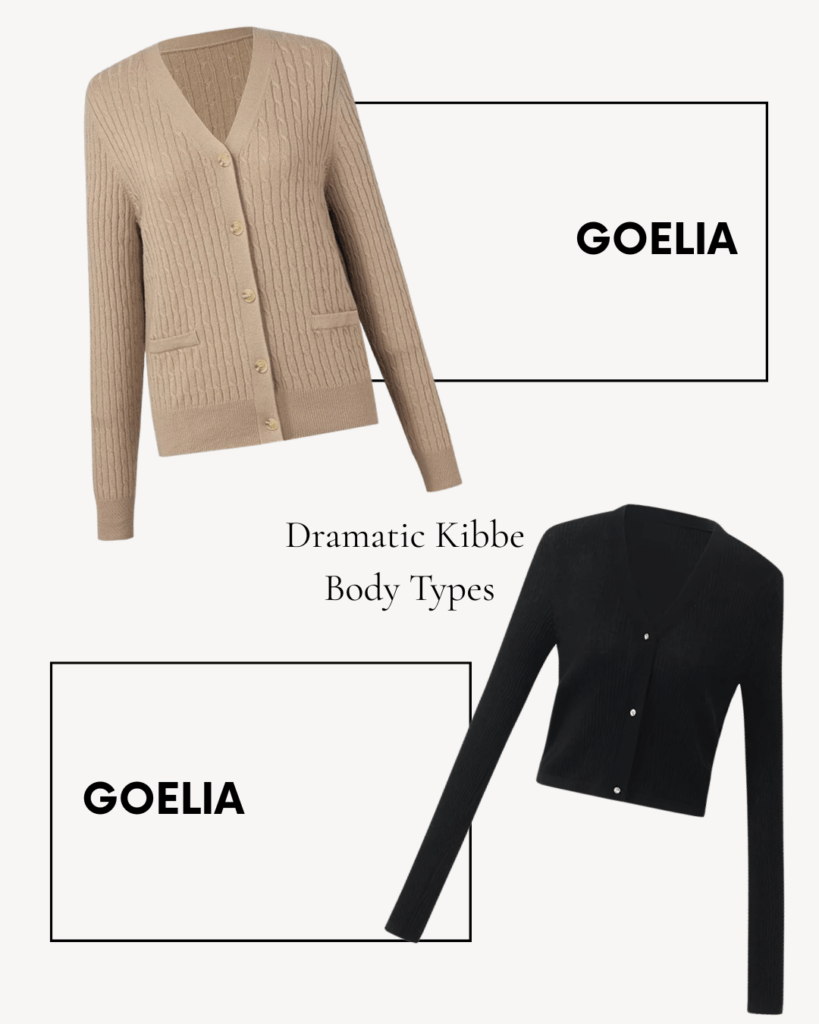
Dramatic
What to look for
- Longline or duster lengths to highlight your vertical line.
- Sharp or sculpted shoulders
- Deep V-necks
- Smooth, heavyweight fabrics that hold shape.
What to Avoid:
- Shorter or cropped lengths that break your verticality.
- Dainty details, ruffles, or extremely fuzzy, shapeless knits.
- Extremely oversized, shapeless silhouettes that hide your sharp frame.
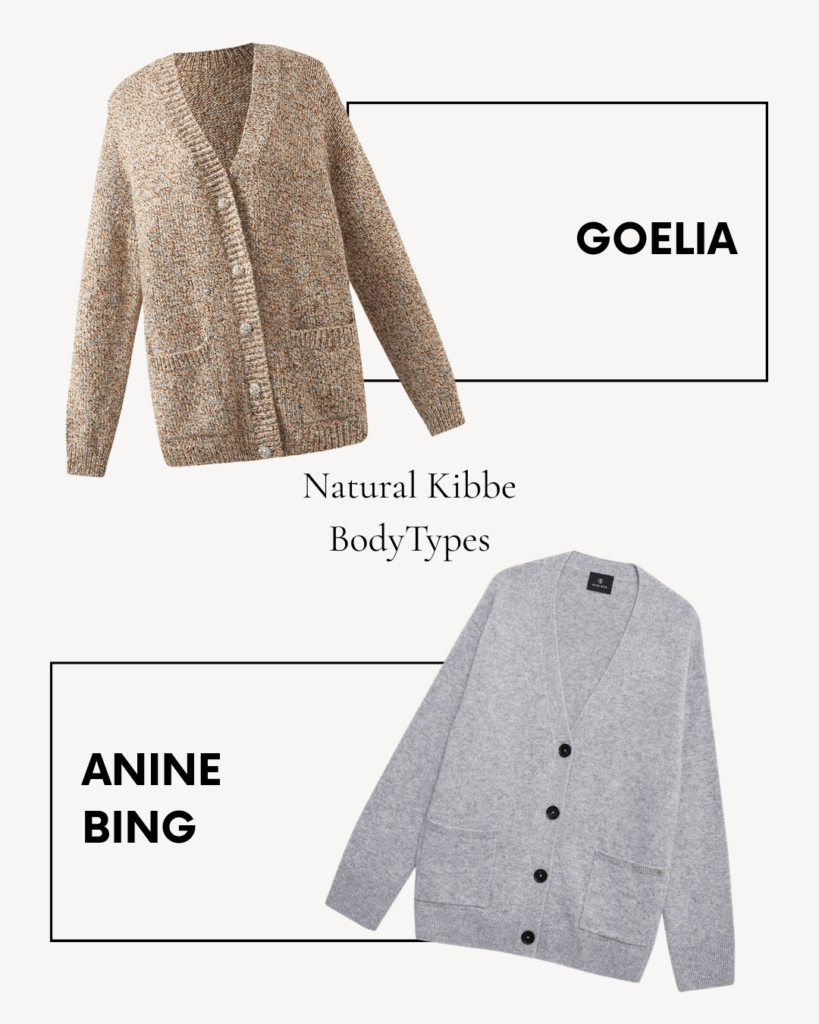
Natural
What to look for
- Unconstructed, oversized silhouettes.
- Chunky textures like cable knits and open-front styles with dropped shoulders. These accommodate your frame’s width and reflect your relaxed vibe.
What to Avoid:
- Very stiff, tailored, or tiny cardigans.
- Anything that feels restrictive or overly polished will look out of place on your frame.
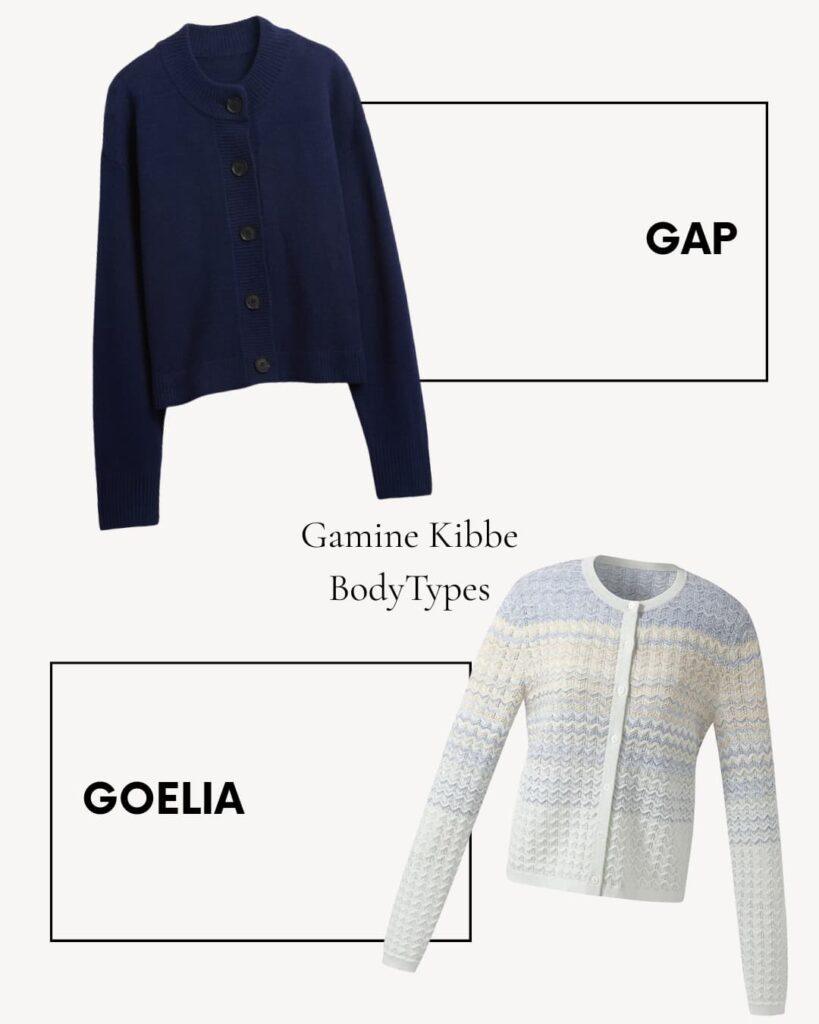
Gamine
What to look for
- Cropped lengths that hit at the waist and fitted silhouettes.
- Look for details like contrast piping, bold patterns, or unique, fun buttons.
- Contrast trim (like a Chanel-style cardigan).
- High necklines.
What to Avoid:
- Long, flowing dusters or shapeless boyfriend cardigans. These will swallow you up and make you look like you’re wearing someone else’s clothes.
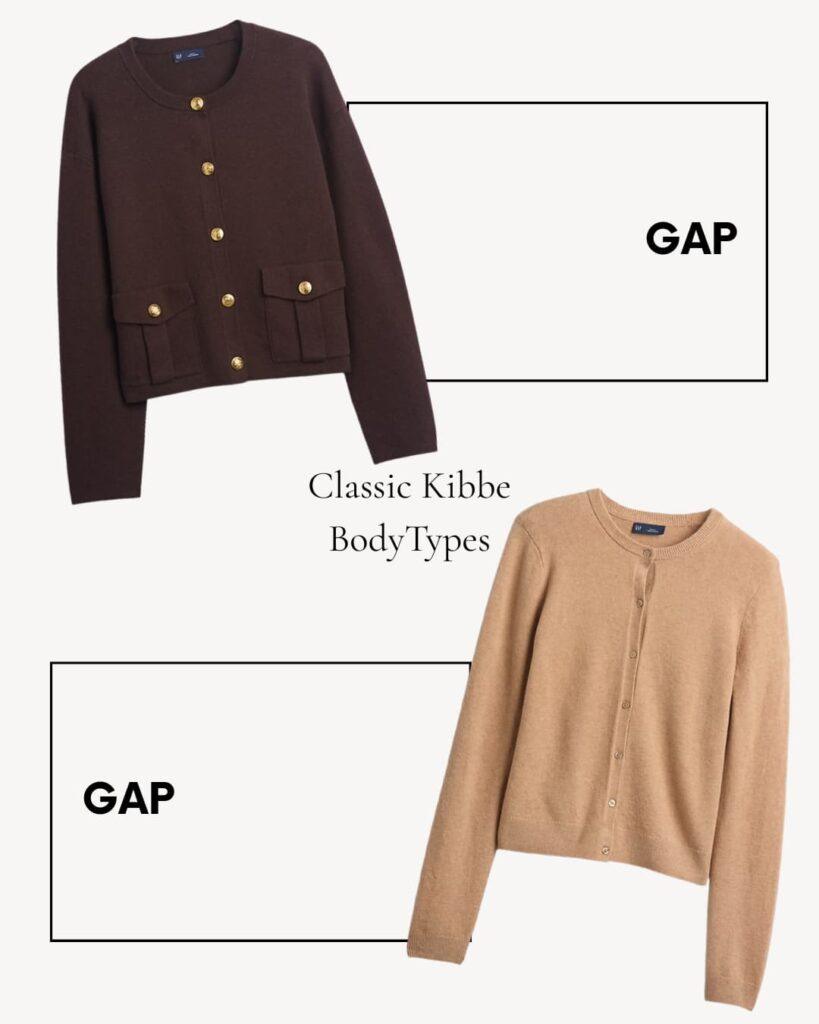
Classic
What to look for
- Clean, moderate silhouettes.
- Hip-length cardigans with set-in sleeves and smooth, fine-gauge knits.
- Symmetrical button placements and classic crew necks are your best friends.
What to Avoid:
- Extreme trends, nothing too oversized, too cropped, or too heavily textured.
- Excessively messy or avant-garde shapes will overwhelm your natural balance.
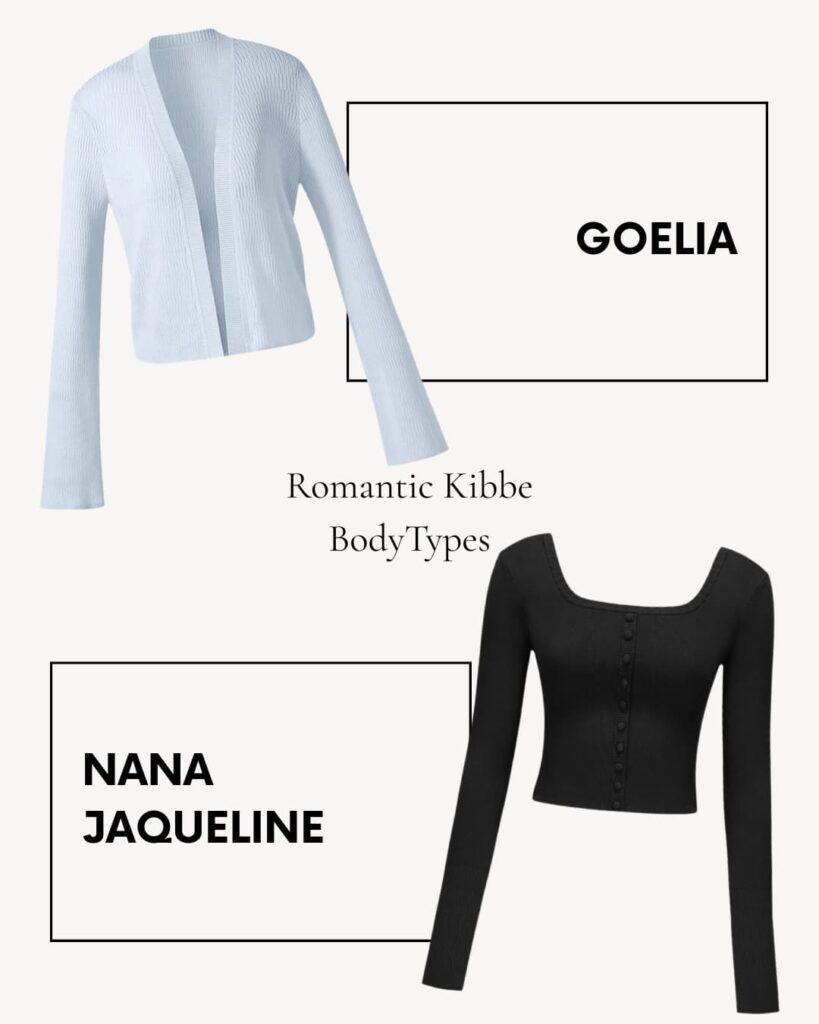
Romantic
What to look for
- Waist-defining silhouettes and soft, draped fabrics.
- Wrap-style cardigans, delicate lightweight knits, and waist-ties that highlight your curves.
- Ballerina-style cardigans and delicate ribbing.
What to Avoid:
- Stiff, heavy fabrics or boxy, straight-cut cardigans.
- If the cardigan hides your waist or feels too sharp and rigid, it will likely look frumpy instead of cozy and flattering.
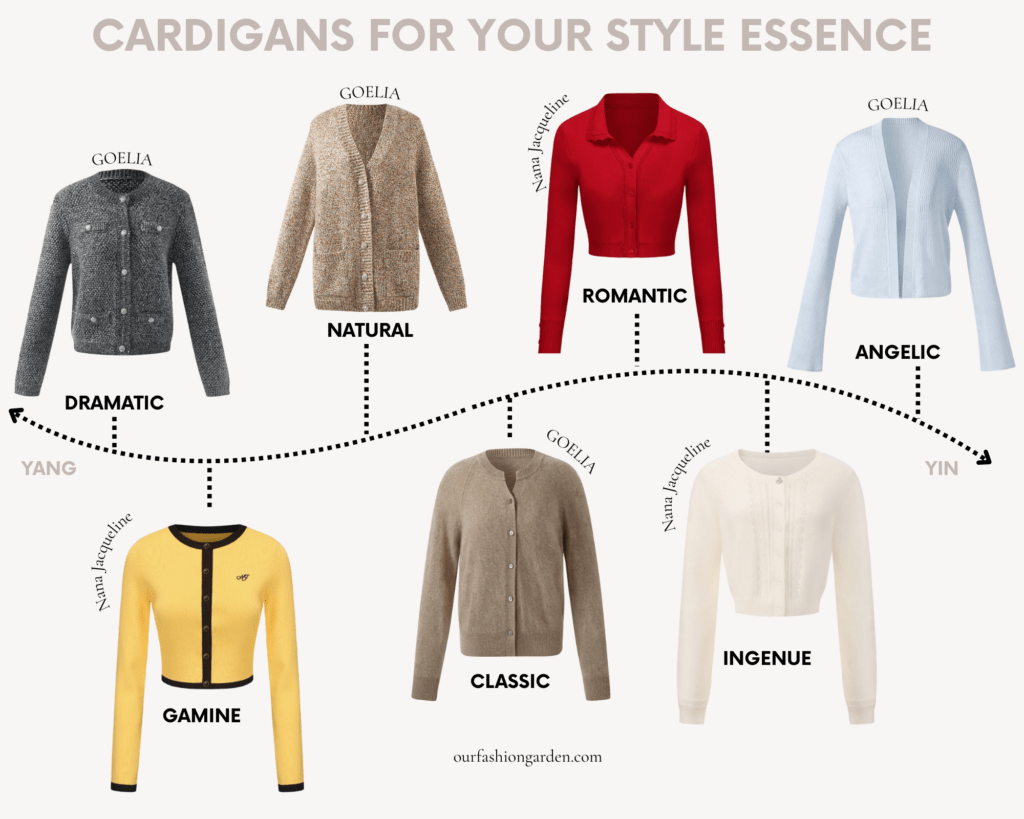
Cardigans for your Essence
Dramatic
- If your main essence is dramatic, large, architectural details will look amazing on you.
- You can wear long lines, high-contrast patterns (like abstract geometrical motifs or large animal prints), and unconventional textures like metallic threads or leather trim.
- Look for sharp, pointed collars and large, statement buttons (like metal or obsidian).
Natural
- Someone with natural essence looks best in very tactile textures like heavy marled wool, chunky cable knits, and raw-looking but very cozy and comfortable knits.
- Some details that will look really harmonious on you are wooden or horn buttons, functional deep pockets, and shawl collars.
Gamine
- The Gamine essence is always energetic and rebellious, so original, quirky details are the best option.
- You can wear bold stripes, contrast-colored cuffs, or mismatched buttons. And compact, sharp shapes work best.
- Peter Pan collars, zipper closures instead of buttons, or embroidered patches are details that will perfectly complement your playful features.
Classic
As for the Classic essence, you’re right in the middle of the style essence spectrum, neither Yin nor Yang, but the midpoint. So you have to look for timeless details, high-quality fine knits.Â
Small, matching buttons, perfectly finished seams, and set-in sleeves that sit exactly on the shoulder are great details to highlight the sophistication of your essence.
Romantic
- The romantic essence requires lush, touchable textures like angora, cashmere, or velvet-like knits.
- Details should be rounded and soft like intricate pearl buttons, sweetheart or delicate-elegant necklines, or subtle lace inserts.
- The piece should look soft and charming, but not as delicate and sweet as pieces for the ingenue essence.
Ingenue
- People with this essence look absolutely charming in small-scale, feminine details like pointelle knits (the knits with tiny holes), pastel colors, and light, airy fabrics.
- Tiny floral embroidery, ribbons as closures, or rounded, scalloped edges are details that clearly reflect the youthful and dainty vibe of this Kitchener essence.
Angelic
Preferably, try to look for light fabrics like very thin mohair, shimmering yarns, or knits that look loose and translucent. But if the weather in your city doesn’t allow it, no problem, you can focus on other details like long, trailing ties, draped hoods, and iridescent buttons that change color in the light.
How to Spot a Great Cardigan
And hey! You already have a ton of tips for finding that cardigan that will fit you like a glove, but I think there are a couple of details that are also super important, some tips that will help you detect good quality cardigans, so you know that they will last you a very long time. Before you head to the checkout, try these three stepst test:
- Check the seams: Turn the cardigan inside out. Look for reinforced stitching at the shoulders (where the weight of the garment pulls the most). If the seams look loose, gapping, or have hanging threads, it will likely lose its shape or develop holes within months.
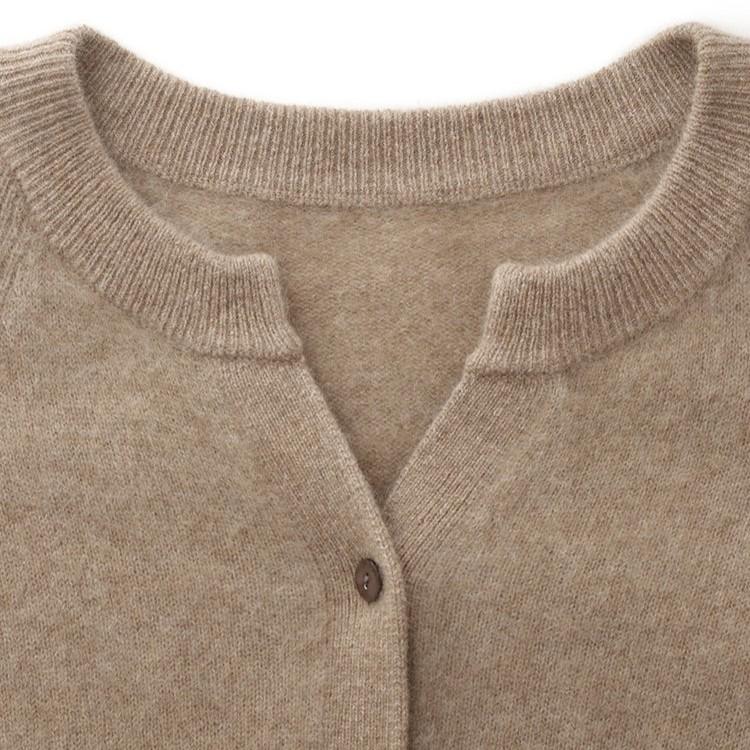
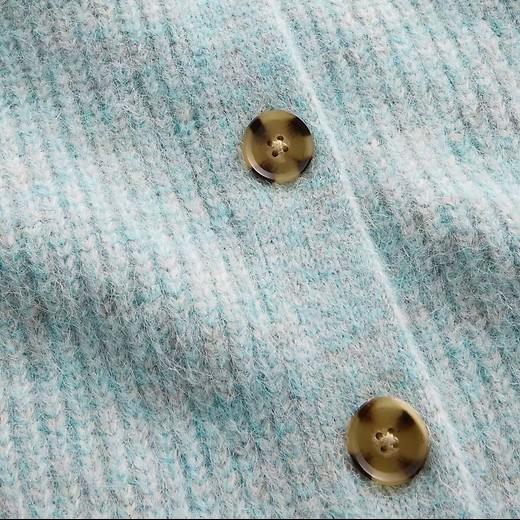
- Button Quality: Some plastic buttons usually feel light and clinky, and they often snap. So if you can, search for wood, metal, or mother of pearl. These materials are more durable and add a weight that helps the placket (the button strip) hang straight rather than puckering. If you want a cardigan with plastic buttons, you can look for one with double fabric reinforcement on the button plate or make sure the garment comes with a spare button, just in case. 🙂
- Pilling: Take a handful of the fabric and rub it against itself for 10 seconds. If it immediately looks fuzzy or creates tiny tangles, it’s a high-maintenance piece. A high-quality knit should remain relatively smooth even after a bit of friction.
Care & Maintenance
A cardigan is a delicate knit, not a structured jacket, so treating it like one will ruin it.
First of all, there is a golden rule for storing your cardigans and knits in general. Gravity is the enemy of knitwear, so better not to hang your cardigan. Hanging it can create permanent bumps from the hanger corners and an elongated, distorted hem. I think it’s happened to many of us, and it’s really sad to see your knits ruined.
It’s better to fold your cardigans loosely and store them in a drawer or on a shelf. If you must hang them, I recommend you use the “fold-over-the-bar” method used for trousers.When washing your wool and cashmere cardigans, less is more. These fibers are naturally odor-resistant. Therefore, unless there’s a visible stain, it’s usually better to air them out than to wash them. When washing, use cold water, and when drying, press the garment with a towel.
And remember, even the best knits pill eventually. So instead of immediately discarding your garment, invest in a fabric shaver or a cashmere comb. Using these once a season will make a five-year-old cardigan look brand new,.

Once again, we can confirm that each piece of clothing is a whole world, a piece that can become truly personal and adapt to us in terms of our body, personality, and style.
At first, all this information might feel like a lot to process. But once you understand the key elements your cardigans need to have, shopping becomes much easier. You automatically rule out the options that don’t work for your life, and you focus only on the ones that do.
We hope this guide helps and makes your shopping much easier. As part of this challenge, each month we’ll recommend an essential piece to help you create a personalized capsule wardrobe. So don’t forget to come back soon for the next item!
And to make the process even easier, you can use Handpicked Attire to search for clothing (yes, cardigans included) filtered by your body type, your style, and even your budget. That way, instead of starting from scratch each time, you begin with options that already look great on you.


Leave a Reply